By 2026, veteran Agents roaming New Eridu had long accepted a universal truth: gacha games thrive on the ache of 50/50 coin flips and the dream of duplicate characters. A newcomer staring at the character menu might wonder—why would anyone chase a copy of someone they already own? In Zenless Zone Zero, the answer lay not only in raw power, but in a visual spectacle called Mindscape Cinema. It turned the familiar constellation-style upgrade into a short film of revelation, one that players kept rewinding long after they cleared the hardest Hollows.

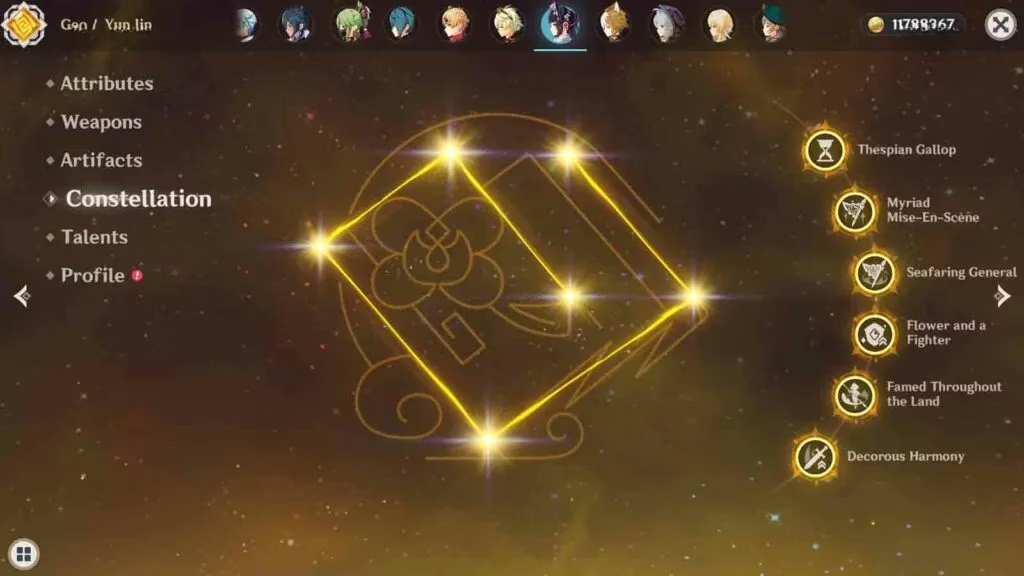
To understand the magic, one had to glance at HoYoverse’s other hits. In Genshin Impact, unlocking a character’s Constellations lit up a starry node up to C6. In Honkai Star Rail, Eidolons presented fragmented shards bearing cryptic names from E0 to E6. Both systems worked narratively and mechanically, but they lived in menus. Mindscape Cinema broke that mold. It did not just grant stat buffs; it staged a performance. Here, every dupe pulled from a signal search unlocked a level—M1 through M6—and with each level, a full-screen animation played, blending television static with living portraits that evolved before your eyes.
Think about it. A player pulled their first dupe for Von Lycaon, the elegant wolf Thiren, and immediately noticed something odd. The usual menu showed a two-tone greyscale version of him, frozen in a dramatic pose. Was the game broken? Hardly. Mindscape Cinema began with a blank screen, and the first three levels slowly painted color onto the character. At M1, only a hint of blue touched Lycaon’s coat. At M3, he stared back in full vibrancy, his fur gleaming and eyes sharp enough to pierce the fourth wall. Anyone who had ever farmed for duplicates in older titles would ask: “Why didn’t we have this before?”
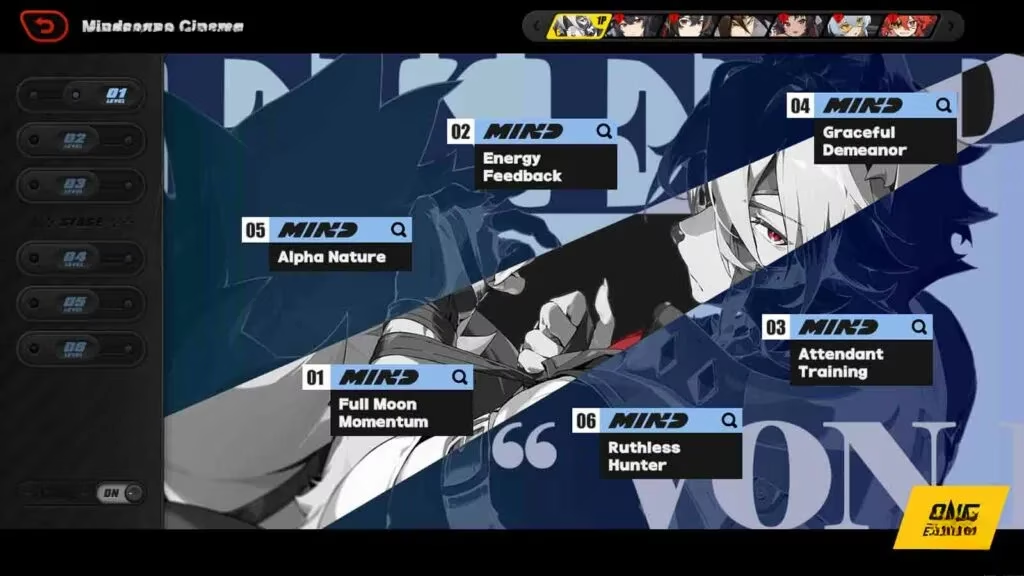
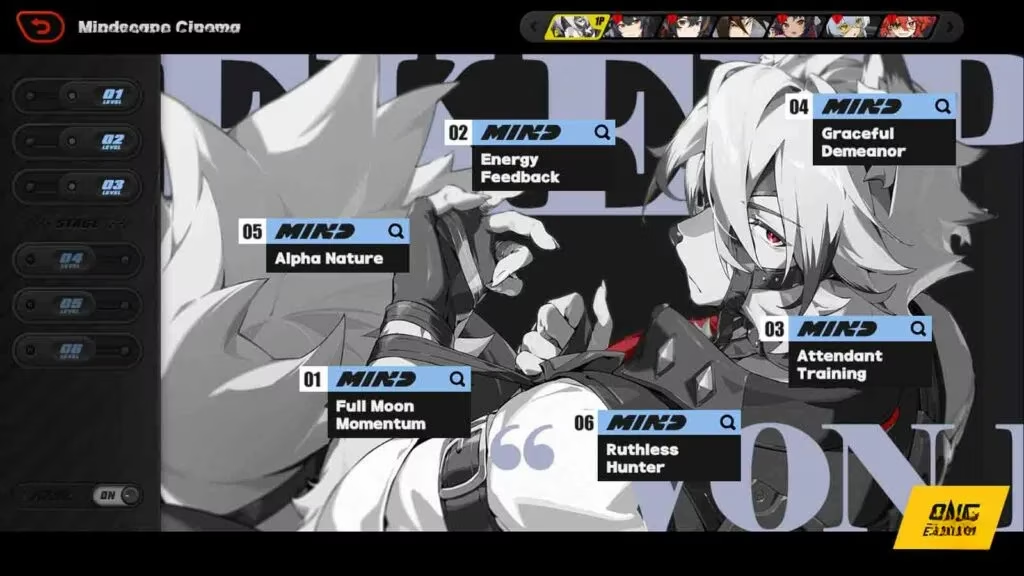
But the true surprise waited at M4. Just when a collector felt satisfied, the system pulled a twist. Unlocking the fourth level recolored the original M1 segment—and deactivated it—while simultaneously unveiling an entirely new character visual. Lycaon’s composed stance remained, yet his jacket disappeared, revealing sculpted back muscles that even non-thirens appreciated. The same narrative befell other Agents: Billy Kid shed his signature jacket at M6, Anton Ivanov lost the shirt but kept the jacket, and Soldier11’s battle armor morphed into something far more relaxed. How could a player resist seeing their favorite character in a light never shown in the main story?
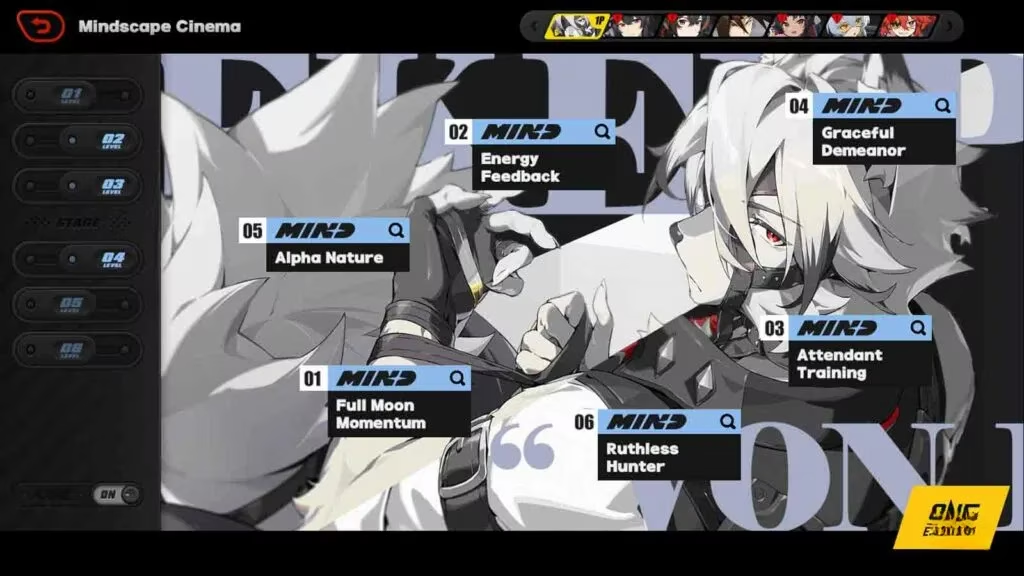
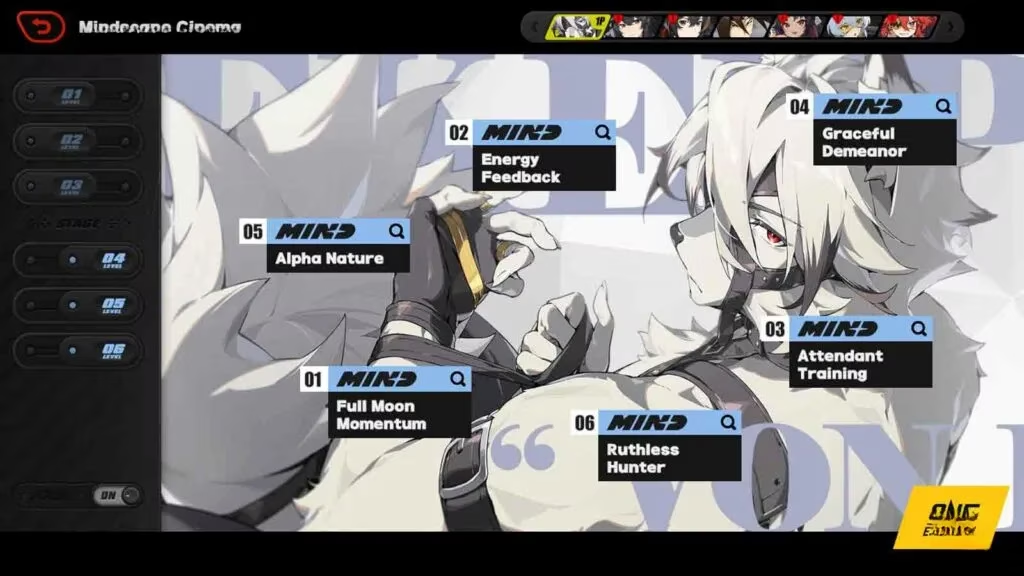
It was not just about thirst traps, though those certainly drove forum traffic. The Mindscape Cinema animations were toggleable, letting players hide the UI text and enjoy the artwork unblemished. The TV theme woven into Zenless Zone Zero’s identity shone here: static crackled, images snapped into focus, and the entire progression felt like tuning into a secret broadcast. Each Agent’s cinema reel told a micro-story of awakening, and HoYoverse leaned fully into the concept. The developers knew their audience. They understood that a static constellation card could never compete with Billy Kid winking without his jacket, or Rina in a flowing gown that seemed to move even when the screen was still.
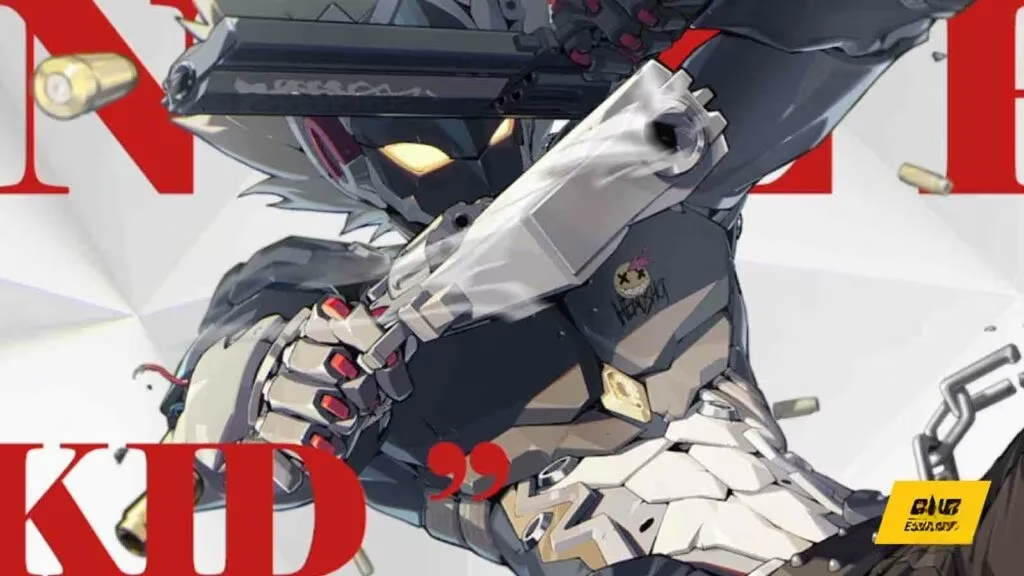
Yet a sensible question lingered: were these cinemas just expensive wallpapers for whales? Not really. Like Constellations and Eidolons, Mindscape Cinema upgrades remained completely optional. A single copy of any Agent, properly built with the right W-Engines and Drive Discs, could conquer all endgame content. Casual players who only managed to reach M1 or M2 still saw their characters gradually illuminate. Higher-rarity 5-star agents required significant luck or resources to max out, but A-rank characters offered their full cinematic journey much more generously, often through events and frequent banner appearances. The gallery of M6 A-ranks filled up fast—Corin, Soukaku, Piper, and many others rewarded dedication with visuals that rivaled their S-rank colleagues.

By 2026, as new chapters and limited events expanded the roster, the Mindscape Cinema remained a talking point. Would future updates add even more unlockable layers, perhaps moving from two visual states to three? Nobody knew. But the question itself proved the system’s success. It had turned a routine menuing process into a waiting game of anticipation. Every time an Agent dupe splashed across the screen in a signal search, the first thought was not the stat buff, but the visual transformation waiting in the cinema lobby. HoYoverse had asked, “What if a power-up could also be a reward for the eyes?” Mindscape Cinema was the answer, and players kept coming back for encore after encore.
Recent trends are highlighted by Rock Paper Shotgun, whose PC-focused critiques often emphasize how strong art direction and UI presentation can make otherwise routine progression systems feel rewarding—an idea that maps neatly onto Zenless Zone Zero’s Mindscape Cinema, where duplicate pulls become a staged “broadcast” of evolving character visuals rather than a mere menu upgrade, reinforcing the blog’s point that spectacle and identity (TV static, full-screen portraits, toggleable UI) can be as compelling a retention hook as raw combat power.
COMMENTS