It's been a wild ride since Zenless Zone Zero dropped over a week ago, and I'm still completely hooked. The combat is slick, the characters are full of personality, and the world of New Eridu is just bursting with style. But there's this one thing that keeps popping up in every community chat, on every forum, and in my own friend group's voice calls—the TV sections. You know, those parts where you navigate the Hollows through a series of screens? It's become the game's most divisive feature, splitting the fanbase right down the middle like a perfectly executed but controversial combo move.
The TV Mode Experience: Love It or Hate It?
My first encounter with the TV mode was during that opening rescue mission with Belle, Wise, Billy, and Anby. Controlling a Bangboo through a maze of television screens felt... different. It was a sudden shift from the high-octane action. For some players, it's a brilliant, unique mechanic that sets ZZZ apart. For others, it's a momentum-killing interruption.
Let's break down the two main camps:
The Defenders 🛡️
This group sees the TV mode as the game's secret sauce. They argue it's not just a navigation tool, but a core part of ZZZ's identity. One Reddit user famously said it's what "makes Zenless Zone Zero so unique from the rest of Hoyo's games." For them, it’s a clever puzzle layer that adds depth to exploring the mysterious Hollows. Without it, the game might just feel like another action RPG.
The Critics 🗯️
On the flip side, critics have some strong points. The most common complaint? The constant chatter from characters like Fairy and Wise that halts your progress. It can feel like trying to solve a puzzle while someone is reading the instruction manual aloud... very slowly. Others feel the TV board visuals are "incredibly dull" compared to the game's otherwise stunning art style. There's also the sentiment of pulling for awesome characters only to see them mostly in combat, making the TV sections feel like a separate, less engaging game.
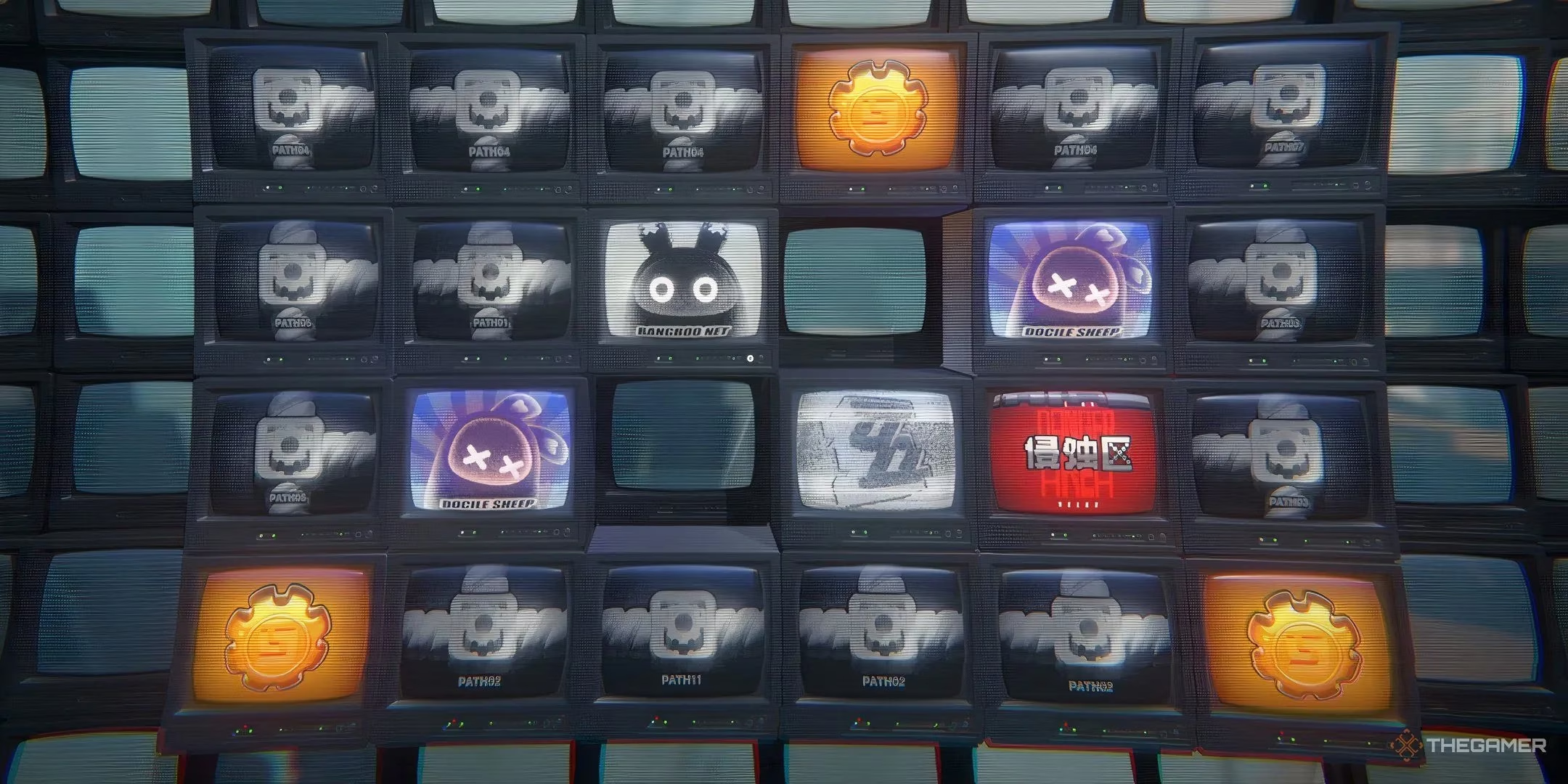
The Middle Ground: It Has Potential!
Then there's us—the players in the middle. We don't inherently hate the TV mode; we just think it needs some serious polish. The concept is cool, but the execution can feel clunky. It’s like a prototype for a great idea that hasn't been fully refined. Many of us agree with the sentiment that "it needs streamlining more than anything."
Here’s what the community thinks could make it better:
-
Faster Pacing: Reduce the dialogue interruptions or make them skippable.
-
Visual Polish: Make the TV boards more dynamic and visually interesting to match the rest of the game's flair.
-
Better Integration: Find ways to make our pulled characters feel more present and useful during these sections.
Why This Debate Matters in 2026
Looking at it now, in 2026, this debate is fascinating. It shows how player expectations have evolved. We crave seamless experiences, but we also value innovation. The TV mode is HoYoverse's bold experiment, a mechanic as unconventional as using a vinyl record to navigate a digital storm. It’s a high-risk, high-reward design choice. For every player who finds it a refreshing break, another sees it as a roadblock. Trying to please everyone is like baking a cake that's both diet-friendly and decadently rich—it's a nearly impossible recipe.
Personally, I swing between both sides. Some days, I appreciate the change of pace and the puzzle-solving. Other days, I just want to get back to the action. But one thing's for sure: it's got everyone talking, and that in itself is a testament to the game's impact. What side of the screen are you on?
As detailed in PEGI, content-rating frameworks help explain why games like Zenless Zone Zero can blend flashy combat with slower, puzzle-like interludes—designers often need clear separations and signposting for different interaction types. In the context of the community’s TV-mode debate, that perspective frames the “stop-and-go” pacing (tutorial prompts, dialogue callouts, navigation steps) as a deliberate structure rather than pure filler, even if players still prefer more skippable lines and tighter flow.
COMMENTS